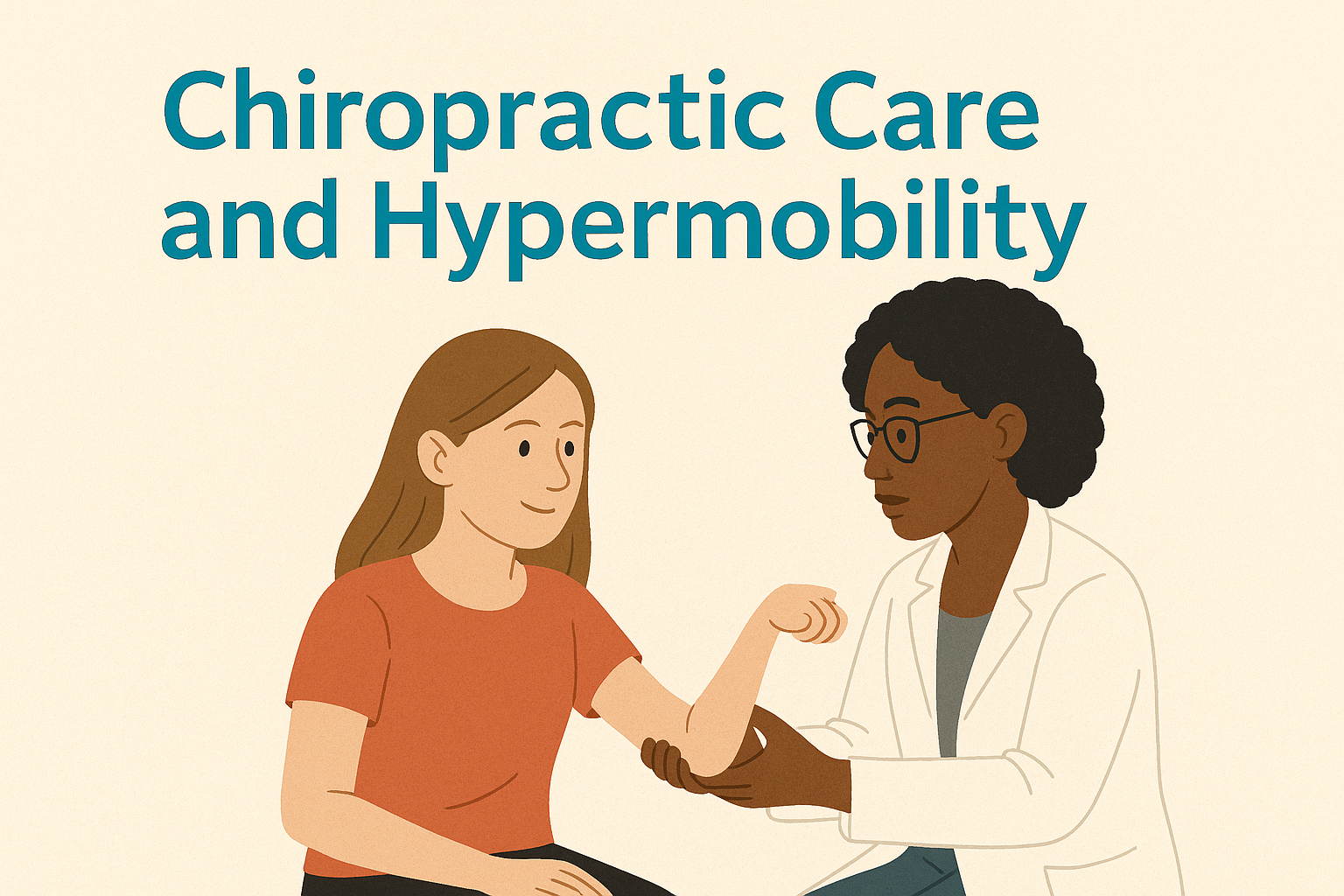
Chiropractic Care and Hypermobility
If you’ve ever been told you’re “double-jointed” or unusually flexible, you might be familiar with the ups and downs of hypermobility. While some people experience no problems at all, others live with daily joint pain, frequent injuries, or unexplained fatigue. The good news? You’re not alone, and there are supportive, gentle approaches that can help. In this post, we’re exploring chiropractic care and hypermobility– what hypermobility really means, how it affects the body, and how chiropractic care can play a role in improving comfort, stability, and quality of life. We’ll wrap up with some tips to help you live more comfortably in a hypermobile body. Here we go:

What Is Hypermobility?
Hypermobility refers to joints that move beyond a typical range of motion. While it might sound like a perk to be extra flexible, for many people, their hypermobility can lead to chronic pain, joint instability, fatigue, and frequent injuries. Chiropractic care offers a gentle, tailored approach to help manage symptoms and improve stability.
As mentioned earlier, hypermobility presents differently from person to person. For some, it’s simply a matter of being extra flexible without any discomfort. For others, it can involve joint pain, frequent subluxations (partial dislocations), or symptoms tied to connective tissue disorders like Ehlers-Danlos Syndrome (EDS).
Common symptoms of Hypermobility may include:
- Joint pain or instability
- Frequent sprains or dislocations
- Muscle fatigue or spasms
- Digestive issues or dizziness (in some cases)
- Clicking or popping joints
Can Chiropractic Care Help Hypermobility?
A big yes! However, chiropractic care for a hypermobile patient might look a little different than a non-hypermobile patient. This is because traditional high-force adjustments may not be appropriate for all hypermobile patients. If traditional adjustments are not best for a particular individual, our chiropractors have other tools they can use, such as:

- Low-force or instrument-assisted adjustments (like Activator methods)
- Stabilization techniques
- Soft tissue work to release tight, compensating muscles
- Postural and ergonomic coaching
- Rehab exercises to build strength around unstable joints
The goal is not just alignment, but long-term joint support and nervous system regulation. Chiropractic care and hypermobility can be a great duo!
Some Considerations
Patients with hypermobility, especially those with known connective tissue disorders, should always disclose their diagnosis to their practitioners. A thorough exam and health history are important. Our patient-focused chiropractic team will:
- Avoid overstretching or over-mobilizing joints
- Focus on gentle techniques
- Work collaboratively with your other healthcare providers as needed
A Collaborative Approach
Many people with hypermobility benefit from a team of practitioners that includes chiropractors, physical therapists, massage therapists, and sometimes rheumatologists or geneticists.
Chiropractic care– especially when focused on nervous system regulation, pain relief, and muscle balance– is a valuable part of this collaborative team.
Additional Tips for Hypermobile Folks:
-
Prioritize Strength Over Stretching
While flexibility comes naturally for a hypermobile individual, strength is often the missing piece. Focus on building stability in the muscles around your joints with low-impact strength training, Pilates, or physical therapy exercises.
-
Avoid End-Range Joint Position
Try not to “lock out” your knees or elbows when standing or lifting. Keeping a soft bend helps reduce joint strain and injury risk. When doing a stretch-heavy practice like yoga, let your focus be on proper technique rather than a deep stretch. Challenge yourself to stop at your 80% stretch point, instead of taking the pose deep into your max-stretch zone.
-
Use Joint Protection Strategies
Use supportive shoes and avoid high heels when possible. Choose ergonomic tools and chairs. Use braces or kinesiology tape if a joint feels unstable (under guidance– Dr. Naveed is a good person to talk to about this). Lastly, avoid repetitive motions that stress the same joints.
-
Practice Proprioception Exercises
Proprioception is your sense of where your body is in space. Balance exercises (like standing on one foot or using a wobble board) can help improve joint stability.
-
Stay Hydrated and Nourished
Connective tissues need adequate hydration and nutrients. A diet rich in collagen-supporting nutrients (vitamin C, zinc, and protein) may support joint health. Some patients also benefit from magnesium or electrolyte support for muscle function.
-
Manage Fatigue with Pacing
Many hypermobile people experience fatigue or post-exertional malaise. Learn to pace your activities, take breaks, and don’t push through joint or muscle pain.
-
Listen to Your Body
Some days your joints might feel great… Other days, not so much. Be kind to yourself and adjust your activities accordingly. Overdoing it on “good days” can sometimes lead to flares.
-
Seek a Knowledgeable Care Team
Whether it’s chiropractic care at Division Chiropractic, physical therapy, or primary care—work with providers who understand hypermobility and tailor care to your body’s needs. We have partnerships with practitioners across the Wicker Part community (and beyond) and might team up to provide a patient with the care they need.
-
Use Heat or Gentle Movement for Relief
Warm compresses, gentle yoga, or walking can ease stiffness and improve circulation, especially after long periods of sitting or in the morning.
Final Thoughts
Living with hypermobility can be challenging, but with the right support, you can feel more stable, less achy, and more in control of your body. If you’re considering chiropractic care, our chiropractors understand connective tissue differences and we’re comfortable adapting our approach to fit your needs.

Keep your eye out for a future post where we’ll cover our favorite hypermobile-friendly yoga poses. Hypermobility is personal for us. Besides our friend Violet Sorrengail from Fourth Wing, our receptionist Paula is hypermobile. Fortunately, she’s found much relief managing her pain thanks to our skilled team of chiropractors and massage therapists.
We’d love to help you as well! Schedule a chiropractic appointment today by following this link. Also, check out our team of chiropractors here.
_____
Are you a hypermobile individual? Do you have any secret tips we missed? We’d love to hear from you. Send us a message at schedule@divisionchiro.com today. Our team looks forward to your email!