How to Release Fascia
When people think about pain or movement issues, they often focus on muscles, joints, or bones. But there’s another important part of the body that often gets overlooked: fascia. Fascia plays a major role in how the body moves, feels, and responds to stress, and it can be a key factor in chronic pain, stiffness, and restricted movement. Understanding fascia can help explain why hands-on therapies like massage therapy and chiropractic care are so effective for many people. This post is for all of you that have emailed us asking how to release fascia! As you’ll soon learn, it’s less about how to release fascia and more about releasing fascial tension.
What Is Fascia?
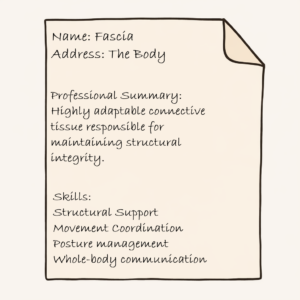
Fascia is a web-like connective tissue that surrounds and supports nearly everything in your body: your muscles, bones, nerves, organs, and even your blood vessels. Yes, fascia has one heck of a resume!
Think of fascia as a three-dimensional support system:
- It wraps around individual muscles and muscle groups
- It connects different parts of the body together
- It helps transmit force and movement
- It provides structure while still allowing flexibility
Rather than being a series of separate parts, the body is more like one continuous system, with fascia acting as the connective network holding it all together.
Why Fascia Matters for Pain and Movement
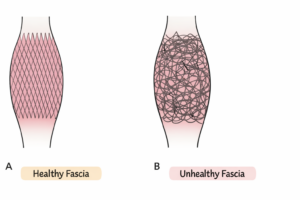
Healthy fascia is smooth, hydrated, and elastic, allowing tissues to glide easily past one another.
But fascia can change over time due to:
- Repetitive movements or poor posture
- Injury or surgery
- Stress and tension
- Lack of movement or prolonged sitting
When fascia becomes tight, restricted, or dehydrated, it can:
- Limit range of motion
- Create pulling or compression in other areas
- Contribute to stiffness or achy discomfort
- Cause pain that seems to appear “somewhere else”
This is why pain isn’t always located at the original source of the problem.
A restriction in one area of fascia can affect movement and sensation far from where you feel symptoms.
Think of it like a knitted sweater (except it’s of a knitted body suit, I suppose). Anyway, if you snag your sweater on a nail, this snag will impact all the other threads in that general area– not just the piece of thread that got caught on the nail. And so, back to fascia: You might feel the pain in your shoulder, but a skilled practitioner can follow the fascia “thread” to the source (the “nail”), and sometimes that “nail” (the source of the pain) is somewhere else entirely.
So, as strange as it seems, a skilled practitioner might not put all their time and focus working on the area that you experience as the source of your pain. Instead, they use their attuned sense of touch to follow the fascial lines to the area the pain stems from. To keep up with that metaphor, they work to “remove the nail.”
So when we “release fascia” we are actually working through the fascial adhesions!
Fascia and Chronic Pain
Fascia contains many sensory receptors, meaning it plays a role in how the nervous system interprets pain, pressure, and tension.
When fascial tissue becomes irritated or restricted, the nervous system may stay in a heightened state of sensitivity. Over time, this can contribute to:
- Persistent muscle tightness
- Ongoing discomfort without a clear injury
- Pain that doesn’t fully resolve with rest alone
Addressing fascia helps calm the system and restore healthier movement patterns—not just temporarily, but more sustainably.
How Massage Therapy Helps Fascia
Massage therapy works directly with the soft tissues, including fascia.
Depending on the technique, massage can help:
- Reduce fascial tension and adhesions (again, this is what most folks mean when they talk about releasing fascia)
- Improve tissue hydration and glide
- Increase circulation and nutrient delivery
- Encourage relaxation of the nervous system
- Restore more natural movement patterns
Myofascial-focused techniques are often slower and more intentional, allowing the tissue time to respond rather than forcing change. Many patients notice improvements not only in pain, but also in how freely their body moves and feels afterward.
How Chiropractic Care Supports Fascial Health
Chiropractic care doesn’t just address joints. It also influences the surrounding soft tissues and fascia.
When joints aren’t moving well, the fascia around them often adapts by tightening or compensating. Chiropractic adjustments can:
- Restore healthier joint motion
- Reduce abnormal stress on surrounding fascia
- Improve communication between the nervous system and tissues
- Help the body redistribute movement more evenly
When chiropractic care is combined with massage therapy, the body often responds more efficiently than it does using just one of these modalities. Movement improves, tension decreases, and changes tend to hold longer for folks that make both modalities a part of their care regiment.
Why a Combined Approach Often Works Best for Fascia
Fascia doesn’t exist in isolation. It responds to movement, touch, alignment, and nervous system input.
That’s why combining massage therapy and chiropractic care can be so effective:
- Massage helps soften and prepare the tissues
- Chiropractic care restores joint motion and alignment
- Together, they support better long-term movement patterns
Instead of chasing symptoms, this approach works with the body as an interconnected system.
Listening to Your Body
Stiffness, recurring pain, or a feeling that your body just doesn’t move the way it used to may be signs that fascia needs attention.
Hands-on care can help restore balance, improve comfort, and support your body’s natural ability to heal and adapt, especially when addressed early and consistently.
If you’re curious how fascia-focused care could help you, our team is happy to answer your questions and create a plan that fits your body and goals. They say the proof is in the pudding. I never understood this saying until I started getting regular treatments with our chiropractors and massage therapists. Now my fascia glides as silky as smooth pudding (well, at least that’s how it feels, haha). Surely this idiom came about after a great myofascial-focused session… Right?
If you’re new here, don’t worry: our silly sense of humor will grow on you.

Also, if you really are new here, we recommend scheduling a chiropractor appointment first. Your initial appointment will include an evaluation and treatment. They can also help you with a tailored-to-you treatment plan based on your body’s needs and goals. They can also recommend which of our fantastic massage therapists may be the best fit for you.
Please peruse the links below to learn more about our team or to schedule an appointment: